
Villa Pavesi through time

Originally built as a noble residence at the center of an extensive agricultural estate, Villa Pavesi was once home to workers cultivating the land for silk production. The estate was a retreat for the Pavesi family and a venue for social gatherings of the local nobility.
The construction of the villa
The villa was built a few kilometers from Pontremoli by the Pavesi family, on a bend of the Teglia River, in a location where a pre-existing water mill once stood.
The Podere di Teglia has belonged to the Pavesi family since 1638. The construction of the first section of the villa likely took place around the same time as the renovation of their palace in Pontremoli, which dates between 1730 and 1743.
The Pavesi estate is situated on a wide river terrace on the right bank of the Magra River, with its northern edge shaped by the waters of the Teglia stream. It is bordered to the west by the foothills of Monte Carbone and to the east by a steep embankment descending towards the Magra, where chestnut trees grow. At the time of the villa’s construction, the road network was different from today. The provincial road had not yet been built, and the Teglia stream was crossed just a short distance from the villa, as depicted in an idealized perspective in a painting above the fireplace of the main floor.
The project
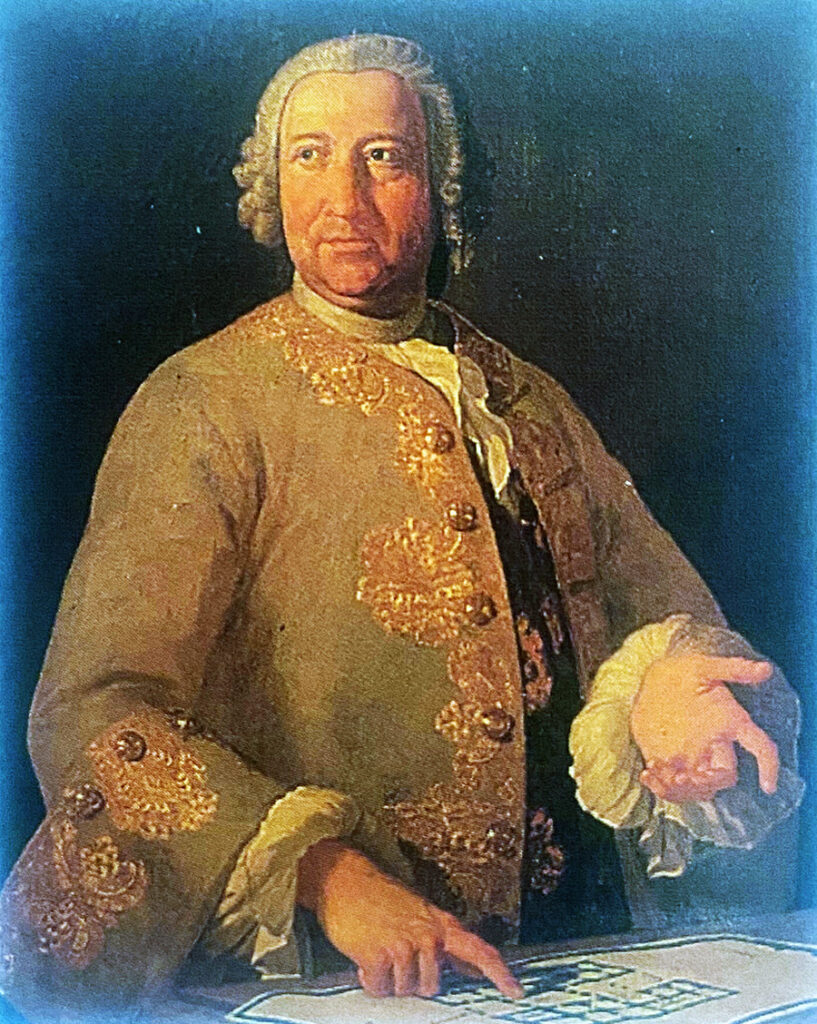
A significant testimony to the villa’s original design is found in a painting by G. Bottani, which shows Giuseppe Pavesi pointing to the villa’s blueprint. Once the location was chosen, Giuseppe entrusted the project to architect and decorator Giovanni Battista Natali, who was already overseeing the renovation of the family’s Pontremoli palace.
Natali envisioned a symmetrical main façade with two floors and identical entrances on either side. The rear section of the building took on a horseshoe shape, with three floors and three superimposed loggias marking the central body.
The internal layout followed the Baroque system: one floor was dedicated to service areas, another to ceremonial spaces, and the third to private apartments.
Only part of the original project, which emphasized symmetry, was completed. However, despite being smaller in scale, the villa maintained the four fundamental architectural principles set by Palladio and, before him, Serlio and Vitruvius: economy, functionality, comfort, and beauty.
By 1747, Natali’s project was completed. The last structural addition took place after 1923, with the extension of new rooms to the west, restoring the original “U” shape. This expansion added two cellars to the basement and four small rooms to the main floor.
A place where time has stopped
A villa that has stood the test of time without radical alterations, it remains a valuable testament to its era and cultural context. The building and its surrounding spaces have retained their original characteristics, resisting architectural trends that often led to modifications in similar estates.
Thanks to conscious choices by the owners and preservation authorities, the villa has never been altered by additions that could compromise its identity. Instead, every intervention has been focused on conservation, respecting the original materials and construction techniques of the time.
Today, this place represents a remarkable example of historical and architectural continuity, offering visitors and guests an authentic glimpse into the past. From the frescoed ceilings to the paved courtyards and the enclosed garden, every detail tells the story of a place that has remained true to itself, a symbol of authenticity in a constantly evolving world.


